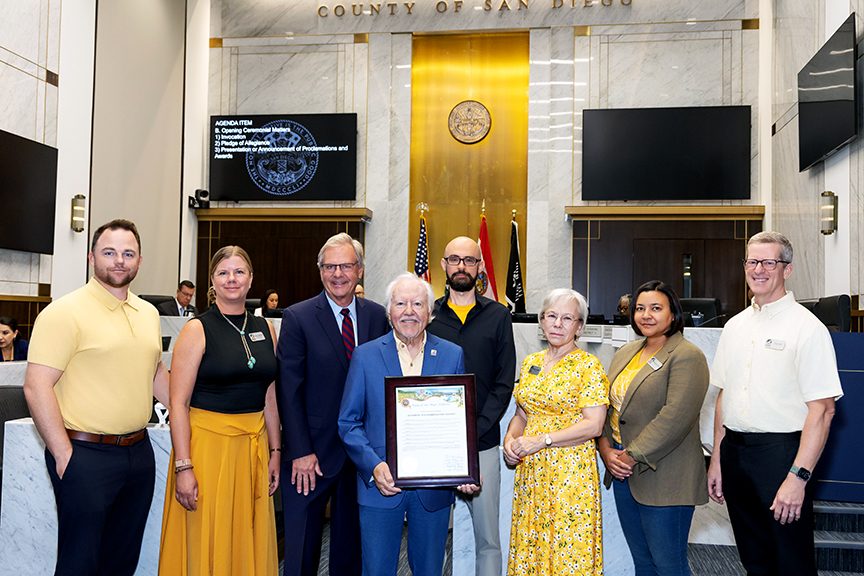
I and members of the Anza-Borrego Foundation board and staff receive proclamation from County Board of Supervisors August 18. Except for Supervisor Desmond (3rd from left), each of us wore something yellow to show visual allegiance with the many GPP opponents also wearing yellow. Easier to see who’s on what side that way.
I did some public speaking last week, which, as you might assume, is not typical. I was due to attend the August 18 meeting of the San Diego County Board of Supervisors to join three other reps of organizations to make a presentation opposing the local utility’s proposal to put a high-voltage Powerlink through Anza-Borrego Desert State Park and other natural areas in the county. (The supervisors are more significant here than in many other areas, particularly in the East, because most of the county is unincorporated, including Fallbrook. The “local” government is the county.)
It was a surprise to learn one of the supervisors was sponsoring a proclamation honoring Anza-Borrego Foundation to be presented at the same meeting. As president of the ABF board, I was to attend and respond to the proclamation, joined by several other board members. Whole thing was to take about five minutes.
(This is long, I know. I hope that at times it verges on interesting.)
I dressed a little more formally than I usually do. Sport coat, “formal shoes.” I hadn’t found the shoes I wanted to wear, but I did find my Navy uniform shoes. Black and shiny (and old). I put them in the car, intending to put them on when I arrived. I was wearing beat-up slippers for the drive. After arriving, I put the left shoe on and then, as I was tying the right shoe, I noticed it was sticking to the pavement and leaving marks. In less than a minute, the sole on that shoe disintegrated.
Thank goodness, I keep the shoes I wear for my volunteer shifts at REINS in the car. The 40+-year-old brown Timberland hiking shoes would not have been my choice, but they were the only choice then. You can get a view of my shoes at right. Thankfully, they were rarely visible. When I mentioned what happened to my fellow board members in attendance, one said the hiking shoes better conveyed our nature conservancy identity. 🙂
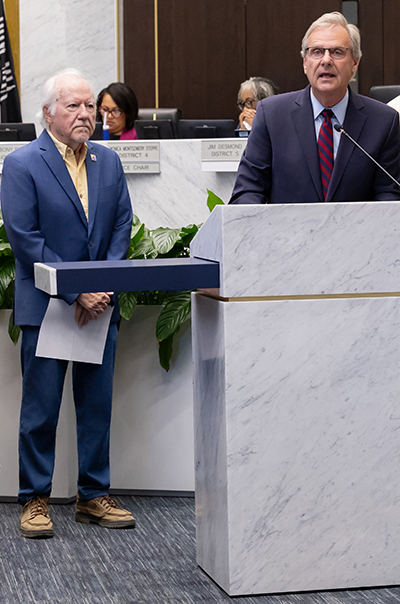
The proclamation session went well and was earlier than we had been told. This video on YouTube is 5:33. Supervisor Desmond speaks for about 2:30 and then it’s my turn for the remainder.
We had been told our later presentation to the board opposing the Golden Pacific Powerlink would be sometime 10 am-noon. We sat through the agenda, waiting for our item #25. Generally, for each item, there is sometimes a speaker, then discussion among the supervisors, and then public comment. Public comments are limited by time (usually two minutes), not number. They can be made in person or on the phone.
There are evidently people who come to these meetings regularly to make public statements. They don’t always talk about the substance. Sometimes, it’s just to complain about things. One young woman, with a shock of purple hair out the side of an otherwise shaved head, who gave her name as “allegedly,” which was also on her teeshirt, commented on every agenda item. Not about the topic, but about how much she found the board to be irresponsible, ineffectual, and/or corrupt. There were also a lot of people, relatively, criticizing the board for not opposing vaccination requirements.
Noon came and went. Then item 24 came. A proposal to end contracts that permitted ICE and Customs and Border Patrol agents to conduct firearm training at SD County gun ranges. Gee no controversy there. Tons of comments. They eventually voted 3-2 to end the contracts. But now it was 1:55. The chair called a recess for lunch with the meeting to resume at 2:45.
Our presentation took a little over 10 minutes. At link below, scroll below the screen and select topic 25. Our turn starts with a brief introduction at 5:08:51. My portion starts shortly thereafter (5:09:30) and lasts about three minutes.
When it ended, the clerk said there were 400+ people who wanted to comment, 404 in opposition to GPP. Twenty-something were to comment in person. I stayed for the in-person comments, limited to one minute each, but by then it was 4 pm. I left.
I had put my dog outdoors at 7 am, believing I would be home early afternoon. I didn’t get home until 5:30. Forty-two miles trip in 90 minutes. Baxter was excited to see me. 🙂
I was pooped, despite sitting 95 percent of the time. It was an early bedtime.
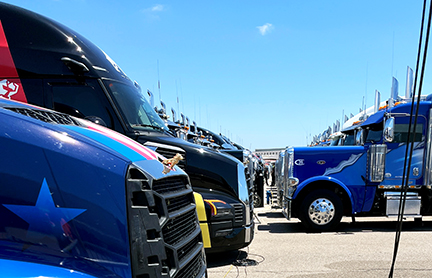
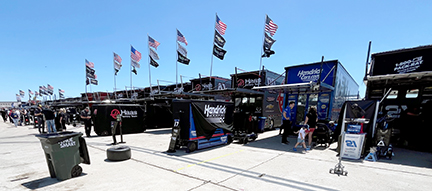
First let me share a bit of sight and sound from June’s NASCAR San Diego Weekend. This post has a lot of info about the event and my participation in it, but this is what the VROOM! title is all about. Up your volume!
(The Navy and NASCAR announced August 24 that NASCAR races will return to NAS North Island in 2027. July 30-August 1.)
June 19-21 was a distinctive summer weekend this year in San Diego. Yes, it was sunny with high temps in the low-to-mid 70s, so that was not so unusual.
But think of these terms and concepts being linked: San Diego and NASCAR, professional speed racing on an active military base. On that mid-June weekend, NASCAR held races in San Diego for the first time and those races took place on Naval Air Station, North Island. No other active US military base had ever hosted such activity.
Earlier this year, I saw that Sports San Diego, the non-profit that offers support to entities interested in holding sports events in this area, was seeking volunteers for NASCAR San Diego Weekend. Hey, that’s what I do. I applied. I was accepted.
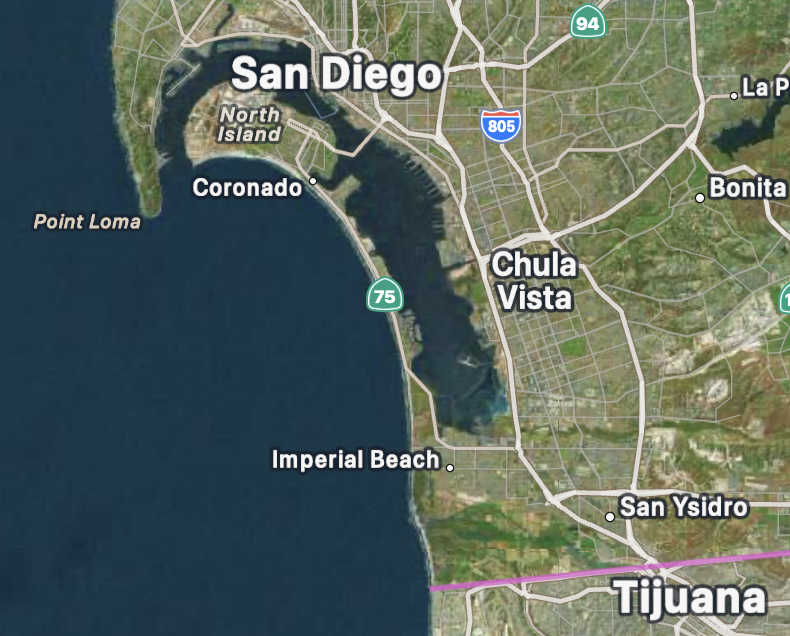
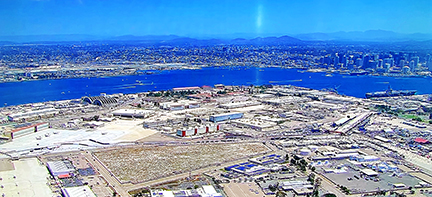
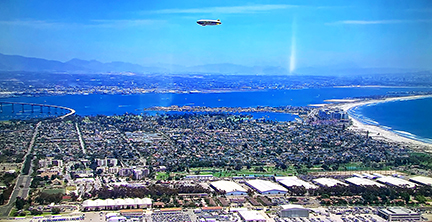
NAS North Island is the northern end of the peninsula that creates the western edge of San Diego harbor. Just south of the air station is the city of Coronado, and the connection to the south is known as the Silver Strand. This likely explains it better than my words.
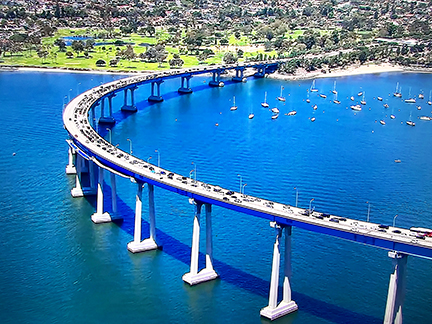
Access to Coronado and North Island is pretty much focused on the iconic San Diego-Coronado Bridge. Again, a picture communicates this better than words.
This is a screenshot from news coverage of the event and shows the amount of traffic waiting to enter Coronado on Sunday morning, day of the weekend’s main event. There is no charge to use the bridge, so this backup wasn’t because of toll booths. The relatively short route to the air station, however, goes through residential neighborhoods and features several traffic lights.
To avoid such traffic, I got a motel room for Thursday-Sunday in San Ysidro, just north of the border with Mexico, but a location that would allow me a straight shot up the Silver Strand. The exit off the 5 to the motel was 1B, less than a mile from the border.
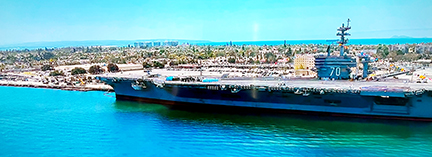
On Thursday, June 18, I attended a briefing on NAS North Island and learned I was assigned to “Guest Services,” though the specific tasks were not then described. I also learned I was assigned to “Carrier East,” the zone adjacent to the berth occupied by USS Carl Vinson (CVN-70).
I also learned that volunteers were expected to park at San Diego State University and take a bus shuttle to the air station. That would, however, negate the whole advantage I had gained by getting the motel room in San Ysidro. And, unlike most of the volunteers, I was already eligible to park on the air station by virtue of being retired Navy.
Thus, early Friday morning I headed out and up the Silver Strand to arrive on base at about 7 am. I parked at the Commissary. I was a little concerned because the stated parking limit there was three hours. Based on the map provided us, I basically wandered over to where I understood volunteers were to check-in. It took me quite a while, but finally located it. The process was much easier on the weekend, as I had credentials for access at a more convenient location. (I received no citation for parking more than three hours at the Commissary on Friday and Saturday. Sunday was even better, as you’ll learn below.)
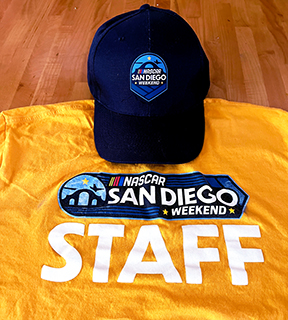
At the check-in, I received credentials, a ball cap, and a teeshirt (shown at right). For whatever reason, we received a new teeshirt each day. The first identified us as “staff,” the second as “volunteer.” I hoped the last one, on Sunday, day of the main attraction, would identify us as “Driver,” but it said “Staff” again. (There was no cost to us for the shirts and cap, or access to the event.)
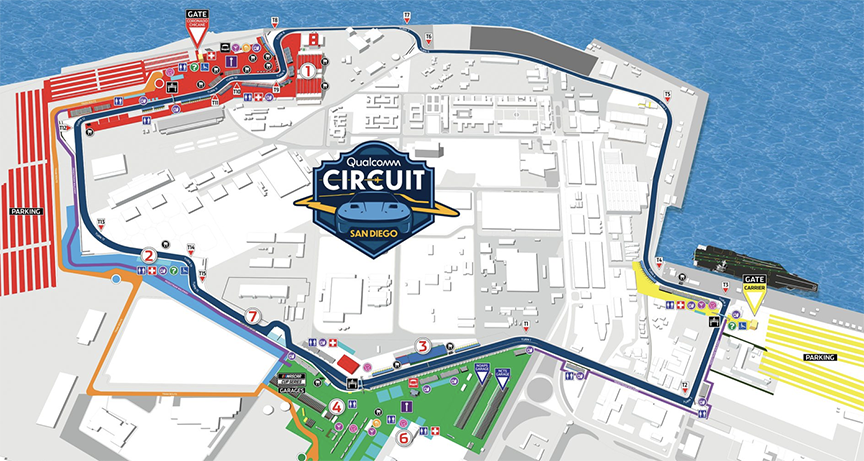
This graphic shows the track layout, with east direction at top. “Carrier East” is on the lower right and it was designated the “yellow” zone.
“Carrier East” was adjacent to Turn 3 on the race course, a 90-degree turn to the left. More significant, in terms of “guest services,” was that it was the entry point for all those who arrived at the air station either by walking (from Coronado or by taking the ferry from San Diego) or ride services.
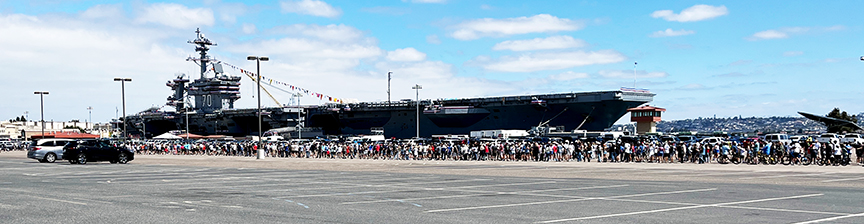
This was the scene Sunday, day of the main race, outside the entrance at Carrier East.
The race weekend attracted a total of 125,000 people over the weekend, several thousand of whom waited in lines like above. Most attendees had tickets that included parking on base, so these patrons had either walked to the base or used ride services.
Weekend attendees were from all 50 states and from 17 foreign countries. Surveys indicated two-thirds of them were attending their first NASCAR event.
Friday featured practice sessions for all three categories of vehicles and the Craftsman Truck Series race beginning in late afternoon. Additional practice sessions on Saturday preceded the O’Reilly Auto Parts Series for the lower-echelon cars, while Sunday featured the main event, the NASCAR Cup Series Anduril 250, starting in early afternoon.
On opening day, I was posted just inside the entrance at Carrier East, welcoming guests, handing out small souvenir packets, and answering questions. Not everyone, shall we say, was happy to learn that access to the main display area and start/finish line was about a mile away from Carrier East and with no option other than to walk.
There were trams connecting the three other main viewing areas — designated green, blue, and red (as shown in the track layout shown above) — but not at Carrier East.
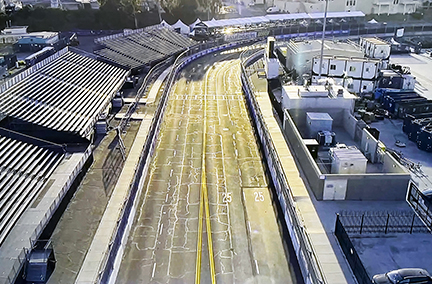
On Saturday, I was moved to the viewing stands alongside the track from Turn 3 to Turn 4, parallel to the Vinson. My view of the O’Reilly AutoParts race is the video at the top of this post.
Approach to Turn 4. I guided people to seats in the bleachers at left.
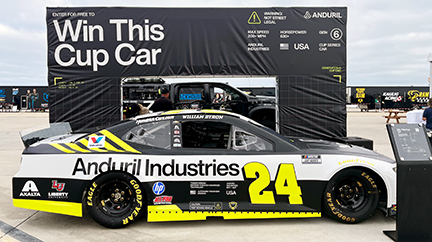
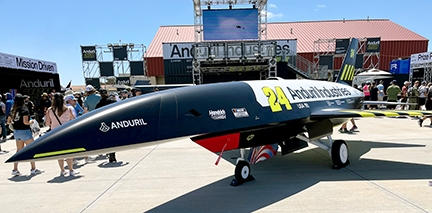
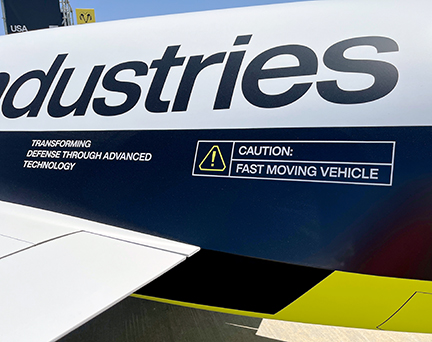
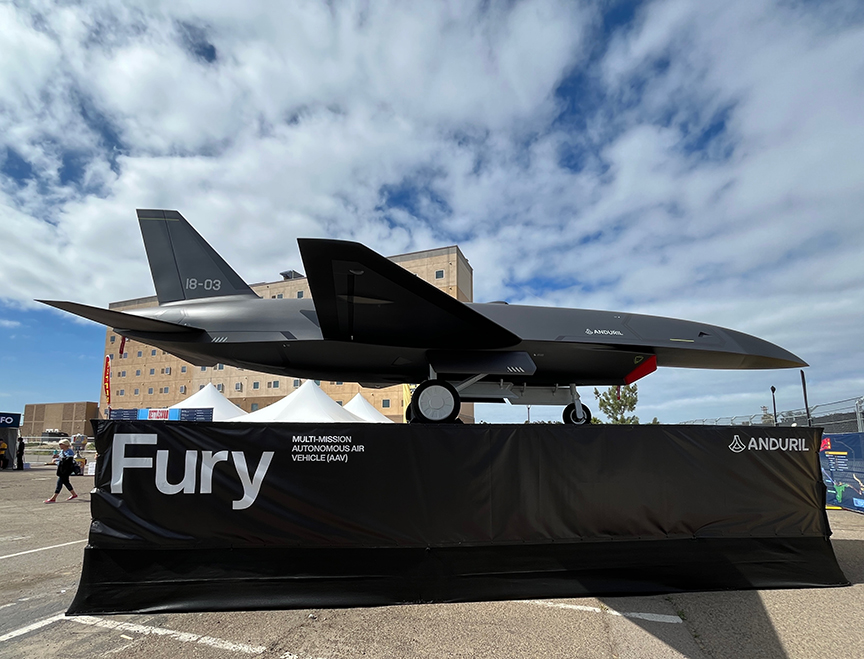
Sunday was the day of the main event — the Anduril 250. (When I first came across the name Anduril, I thought it was the name of a medication. Uh, no. Unless it’s “bad medicine” for some. It’s the name of a major U.S. defense contractor that specializes in the newest sector of weaponry — autonomous systems, e.g., drones, submarines, unmanned aircraft. The name is taken from Lord of the Rings and is the legendary sword of Aragorn. You’ll see some of their products on display in the galleries further below.)
I had planned to repeat my parking on base at the Commissary on Sunday, but with that being the day of the main event, traffic was especially heavy and security was tighter. As I approached the Commissary parking lot, there was now a sentry there who signaled me to stop.
“Where are you going, sir?,” checking my ID. I told him the Commissary and he asked if I worked there. Learning I didn’t, he said I might well be towed if I parked there. “Are you going to NASCAR?,” he asked. I told him yes, and I was a volunteer. He gestured toward the parking lot across the street, intended for those stationed on base, and suggested I park there. Best parking of the weekend, even a shaded spot.
I was at my third posting for the main race, at the stands alongside the track from Turn 2 to Turn 3.
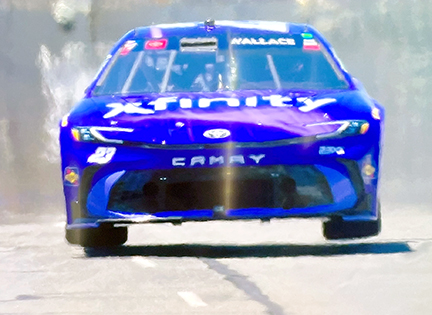
Cars often lifted off the track coming into Turn 2.
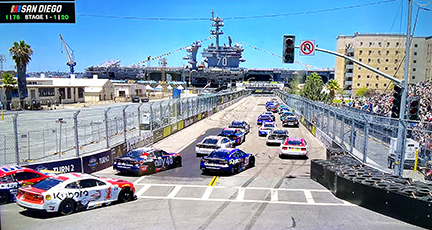
Photo below is looking east, with the 90-degree left Turn 3 ahead.
Viewing stands at right.
Here’s video (0:31 secs) of the top NASCAR entries coming through Turn 2. (Hard to miss the irrelevant “STOP” sign. A reminder of how this track overlay roads that formed the system supporting the base.)
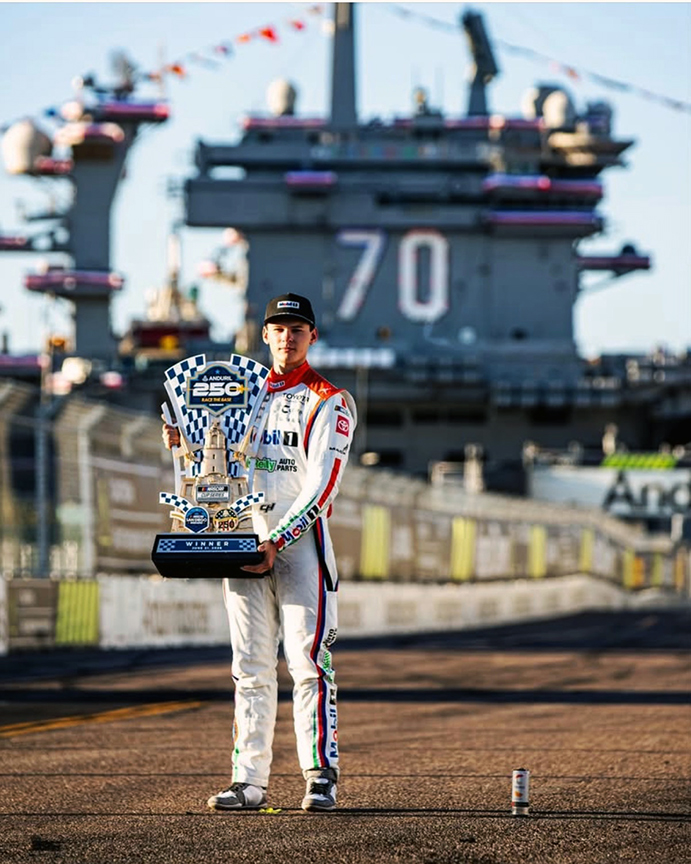
Corey Heim
The race was won by Corey Heim, his first NASCAR Cup victory. He was 10 seconds ahead of Bubba Wallace.
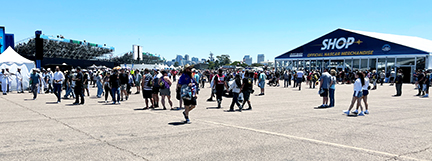
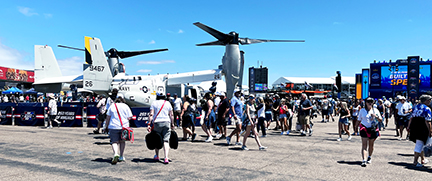
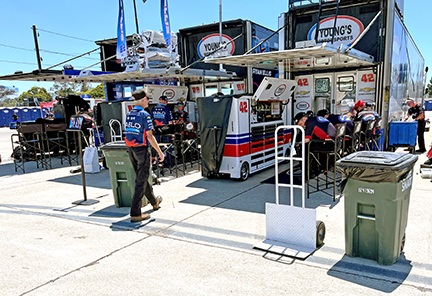
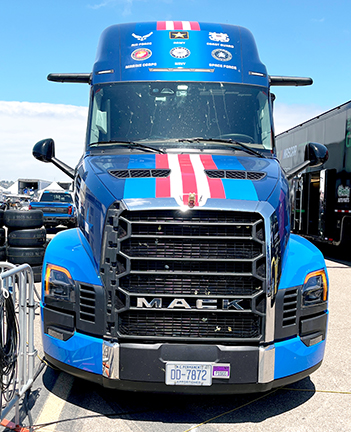
My shifts began at 7 am and ended at 2 pm on Friday and Sunday, noon-7 pm on Saturday. That gave me opportunities to spend a little time viewing the exhibits in the green area near the start/finish line. Below is a gallery of photos of some of those exhibits.
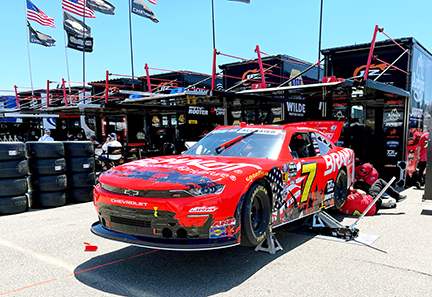
As staff, I also had access to the “garage” area, where I could get a little closer to the race cars and see them in place rather than going by in a blur. Here is a gallery of some of those scenes.
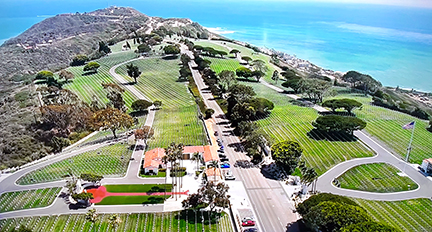
Just to the north of NAS North Island is Point Loma, the location of several Navy commands, including a submarine base at Ballast Point. It is also the location of Fort Rosecrans National Cemetery. I found this a particularly gorgeous view of this amazing facility.
Post-NASCAR Weekend, it’s unclear whether it will be held here again. NASCAR, for many reasons, would like to hold another very popular event, bringing in so many new fans. Not sure about the Navy, or the residents of Coronado.
In addition to the inherent interference with “normal” base and town activities, there were also many logistical failures and shortcomings. Attendees complained about excessively long lines for refreshments, with many locations running out of food and drink long before the long lines were served. At my Saturday location, by mid-afternoon, all the portable toilets were filled, literally, to overflowing. Those who didn’t need to sit could use them, but the stench was really bad. Worse, they were in the same condition the following morning.
The event might end up a one-off, but it was a memorable weekend.
(As reported at top, NASCAR will indeed return to NAS North Island July 30-August 1, 2027. Vroom, vroom!)
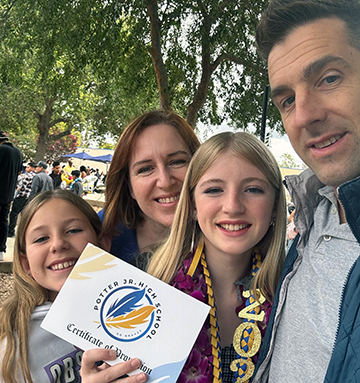
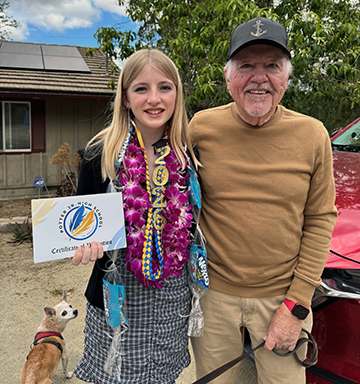
First grandchild Adeline Anderson was promoted from eighth grade on May 29 and will enter Fallbrook High School in August.
Yikes!
Addy was born in New Hampshire less than two weeks after I moved coast-to-coast, from Brookline to Fallbrook. Her aunt Julia, who had accompanied me on the drive west, and I had scheduled flights back to greet her and we did so a couple of days after her birth.
Now she’s going to high school?!
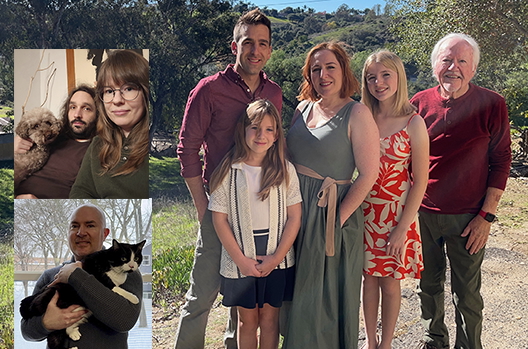
The Andersons, who had visited from New Hampshire in Februarys for several years, moved in with me — at my request — in 2019. As I had quoted the Beach Boys at the time, “I wish they all could be California girls” and now daughter Meredith, Adeline, and new sister Alice were! Dad Winter, of course, was welcome, too.
Anyway, back to the present. Here’s a brief video of the promotion ceremony Friday for the Class of 2026 at Potter Junior High School in Fallbrook. Focusing, of course, on Addy.
And photos of the proud family and grandpa (including Baxter).
For those unfamiliar with Southern California schools (most of them on coastal California, anyway), the schools are mainly horizontal, not vertical. You might see a second story on occasion, but rarely. And open space in between.
Here’s a brief look at some of Potter Junior High, just to give an orientation.
And let’s not forget the other grandgirl. Alice wrapped up her school year by being named to not the silver honor roll, not the golden honor roll, but the platinum honor roll. Congratulations!
March 7 was a busy day for me in Borrego Springs. We had an Anza-Borrego Foundation board meeting in the morning and I announced that evening that the 2026 ABF Desert Warrior Award was to the late Nicholas Clapp, former trustee and renowned documentary film-maker.
I presented the award to his widow, Bonnie Clapp, at the beginning of that evening’s performance of Jimmy Smith’s Outrageous Front Porch Revue, an ABF fundraiser, at the Borrego Springs Performing Arts Center. The revue, in its ninth year, offers a great evening of Americana music performed by current and former residents of Borrego Springs. Jimmy Smith is a former long-time trustee of ABF and board president.
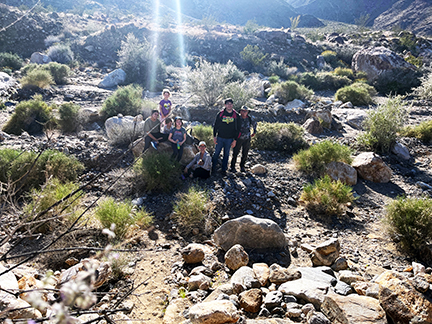
In between the board meeting and performance, I had the opportunity to get out into the desert. ABF board vice president Tim Mielcarek led a group on a three-mile hike (1.5 miles out-and-back) to Henderson Canyon wash. The group included members of the families of board member Elizabeth Latham and of ABF Education Director Samantha Young. Kids hiked and infants were carried.
The hike originated in a section of Galleta Meadows, a privately-owned but publicly-accessible parcel off Henderson Canyon Road, that features several sculptures by the distinctive sculptor Ricardo Breceda.
Heading out.Gold miner and mule
The desert bloom was a bit past peak, but there were many blooms along the way, including the distinctive and fragrant Desert Lily.
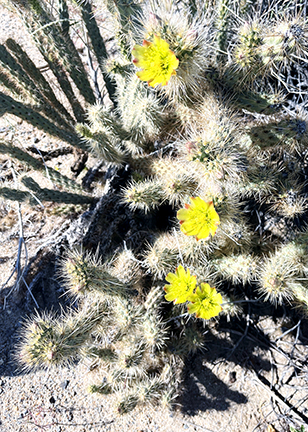
I wish I had done a better job photographing this Desert Lily.Cactus blossoms
The objective was the Henderson Canyon wash and, after what seemed farther than a mile-and-a-half, we got there. I should not complain: the terrain was pretty flat and the weather was very pleasant. High temperature around 70, not particularly dry (I even sweat a little).
The wash.Early-arriving hikers in the wash.
As I somewhat trudged on the way back, I marveled at the kids running and leaping among rocks. Ah, youth.
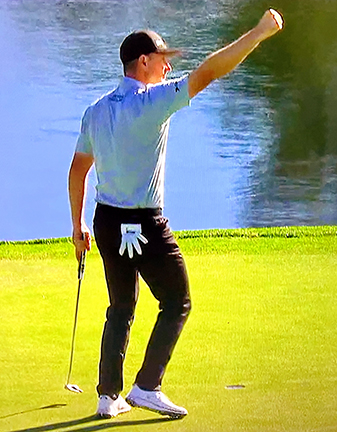
Justin Rose dominated the 2026 Farmers Insurance Open. Taking the lead on the first round, he never lost it. He finished with a record score of 23 under par and a near-record seven-stroke victory. His wire-to-wire win was the first since Tommy Bolt’s victory in 1955 and, at age 45, Rose is the oldest to win the Torrey Pines tournament.
Not bad.
From a volunteer’s standpoint, the best part of the tournament this year was the weather. In contrast to last year, when strong Santa Ana winds both made conditions uncomfortable and contributed to the spread of several wildfires in the county, temperatures were pleasant, winds were light, and skies were clear. Seasoned veterans said it may have been the best four straight days of tournament weather in memory.
This was also the first tournament in several years to take place on the previously normal Thursday-Sunday schedule. With the NFL adding a 17th regular schedule game in 2021, that placed the Farmers Insurance Open final round on the same Sunday as the NFL conference championship games. CBS, which would broadcast one of those games, wasn’t going to show a golf tournament instead. So golf at Torrey was moved to Wednesday-Saturday. Losing a weekend day had a dramatic effect on overall attendance and television viewership.
This year, the tournament moved to later in January to accommodate the changed NFL schedule. Indeed, the final round was played on February 1.
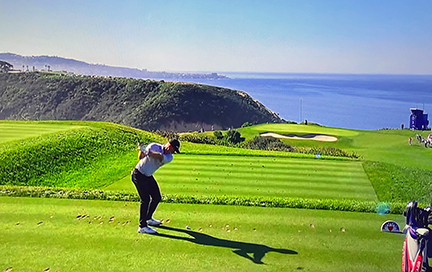
San Diegan Xander Schauffle tees off at 3S in the pro-am.Justin Rose tees off at 3S in the final round.
Another factor with a major influence on the tournament this year was uncertainty . . . about the future of the tournament itself. This was the last year Farmers Insurance Company would be sponsor, and no new sponsor had been announced.
Chatting with a few young men who were curious about volunteering at the tournament, I described the costs, but also the benefits and they expressed enthusiasm at the prospect. Then I realized, and told them, there was no guarantee any of that would be accurate in the future.
The PGA (Professional Golfers’ Association) established a “Future Competition Committee,” chaired by Tiger Woods, last year. Their task is to establish a new competition structure, including schedule and locations. The committee’s recommendations may not be known until summer.
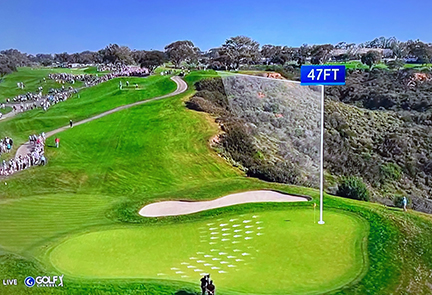
TV graphic showing the drop from tee to green at 3S.
Back to this year, the volunteer crew at 3 South was little changed from previous years. When one of the crew was asked why they were willing to keep volunteering to work with me as hole captain, he said, “Well, we all knew Bill could use a lot of help.”
Got that right.
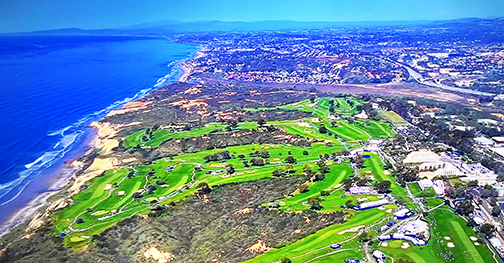
Blimp view of the northern half of Torrey Pines. 3 South is at the lower left.
The Competition Support team assigned to 3S was new to us. These are the folk whose job is to specify the location of teeshots that land off the green, providing ShotLink the information that allows them to convey the length of the shot off the tee, distance from the hole, etc. And that information makes for winners and losers who had bet on such info.
We had one interesting volunteer pairing. Debbie Dominick headed up the Competition Support Team and her husband, Tom, joined us in Gallery Management for the weekend, moving from 3 North, where he had worked the first two rounds.
They provided a “small world” moment. I mentioned to Debbie that the first house I bought was in Franklin, Mass. Gasp! That was the town in which Tom had grown up. So a little bit of reminiscing about that community, a marathon-distance southwest of Boston.
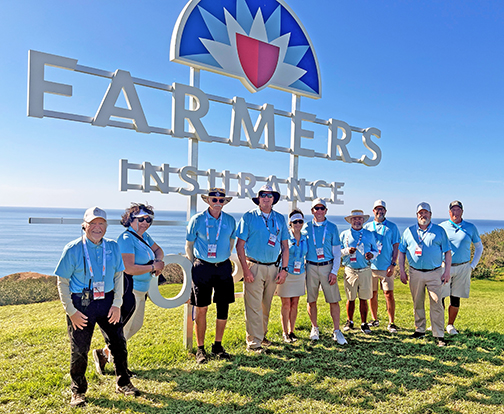
Here’s a shot of both teams at 3 South. We figured it was a no-brainer to take the picture at the Farmers Insurance sign, cuz it ain’t gonna be there anymore.
Stay tuned for how we get together again . . . if we do.
“I can see clearly now.” Remember that song from the early ’70s? The major change in my life this year happened at the end of last year, after the 2024 version of this letter had been sent.
On December 16 and 30, I had surgery to replace cataract-laden lenses in my eyes with new ones, designed to improve my vision. The doctor said he would make me “less nearsighted.” He went better than that, advising me after the operations that I no longer needed any correction, near or far.
I had progressive myopia as long as I can remember, so I may see better now that ever before in my life. What a blessing. And the world is so much more colorful than before, when cataracts made things duller than “normal.”
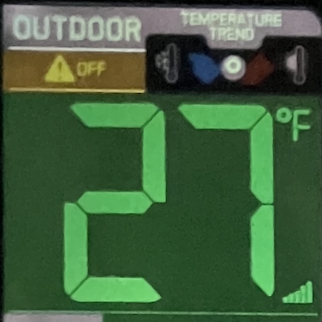
The rest of the year was pretty good, too, though it started out with record cold. For us, here, since coming to Southern California at least. Broke record of 31, set last year. Doesn’t mean it didn’t warm up significantly later. We’ve seen temps go up 40+ degrees from early am to early pm.
Once again, I was a hole captain at the PGA tournament at Torrey Pines in late January. At least for many volunteers this year, the focus was more on the horizon than on the course. This was soon after the devastating fires in Los Angeles, and conditions in our area were creating fires here.
On my pre-dawn drive south on the first day of the tournament, I saw that the 15, the inland freeway, was backed up, with no one moving. I switched to the 5, along the coast, and learned from the traffic report that the backup on the 15 was because of a fire. That was very close to the scene of the fire that had forced me to evacuate in early December 2017.
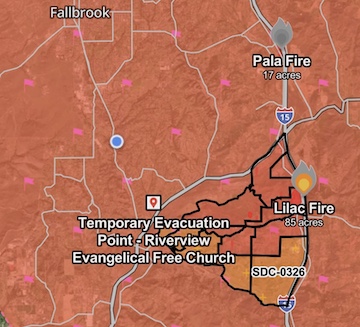
Indeed, when I got to the course and opened up WatchDuty, an invaluable app that provides info about fires in the West, our house was in a zone adjacent to a zone that had been “warned” it might have to evacuate. That fire was stopped before we ever received that warning.
Our house is the blue dot, left middle.
But other fires in San Diego started up. Several of the marshals assigned to my hole were unable to attend or had to leave because their homes were in jeopardy or had the potential to be.
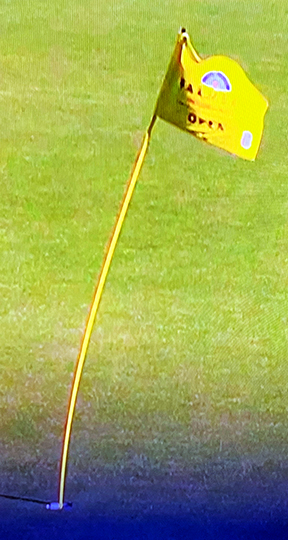
Gusty winds were prevalent most days.
As the photo of the flag on my hole attests, high winds were a major factor in the spread of local fires. It was several days before the spate of fires became contained.
Last year, I visited Julia and Sam at their new residence in Arlington, Va. Julia returned the favor in May, and we visited a gold mine in nearby Julian and the San Diego Zoo Safari Park.
We also went to the Birch Aquarium, part of the Scripps Institute of Oceanography at UC San Diego. One of the most amusing scenes was captured in the video below. The ray spent several minutes going up and down repeatedly. It seemed as if it was enjoying itself. With audio on, you can hear a child off-screen saying “Wheeeee!” on its descent.
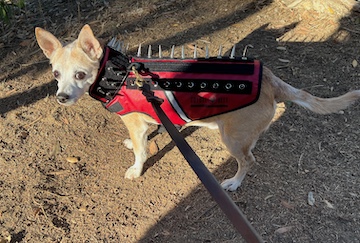
Julia had not seen Baxter for several years and figured he would not remember her. He did. This year, based on local reports of coyote attacks on small dogs, even being walked by humans, I got him a “coyote vest.” He occasionally is “armored up” when we go out for a walk.
Lee
One of the worst elements of advanced age is the loss of friends and loved ones. In August, Lee Pellegrini, a dear friend and former colleague when I worked at BC, died at the age of 75. In the course of sharing the news with other former colleagues, we re-established connections by sharing memories of what we all remember as a wonderful group of co-workers.
Rob
In November, Rob Sternstein, husband of Margaret Evans, died at 65. I always wanted to visit Rob and Margaret on my visits to Boston. They were warm and welcoming, and sharing time with them was always a joy.
When we learned BC was to play football at Stanford in September, the eastern contingent of classmates agreed to come out west for the first time since 2013. The Downeys found a great airbnb location on Half Moon Bay for us.
We joined hundreds of BC alumni from California at the game and had a great pre-game tailgate among the trees near the stadium.
Tom Sugrue at the tailgate, ready for more!
Less of a good time at the game itself, as the Eagles suffered the second loss of their season. A precursor of what was to be a 2-10 season overall. You can see much more from Stanford here (tailgate and game), here (Moss Beach), and here (Stanford campus).
I did go east for football, too. Local friends Lori and Joe Mahler made one of their season tickets available to me for BC-Notre Dame and I joined them for the Nov. 1 game in Chestnut Hill. Also saw family and friends on the Cape and at BC. More about that here.
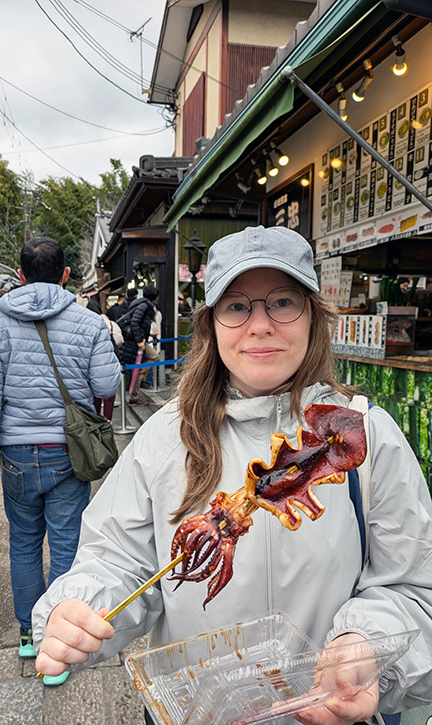
As I write this in mid-December, Julia and Sam are in Japan . . . for the second time this year (third for Sam). They spent time in Tokyo/Kyoto in Feb/Mar, Sam went back in the summer to climb Mt. Fuji, and this time they’re focusing on Hokkaido. Here’s Julia with “squid on a stick.”
In Virginia, Julia’s joined the crew of Trader Joe’s.
Dillon has moved to Ann Arbor, Mich., where he continues on the staff of the National Center for Manufacturing Excellence.
It appears I will be back as president of the Anza-Borrego Foundation for the coming year. We’re in a transition from being a “working” board to becoming a “governing” board.
Situation stable at home. Meredith at Boys & Girls Club, Winter at Charlie’s Foreign Auto in Escondido. Alice hit double digits in June. Addy turns 14 next month. High school for her next fall!
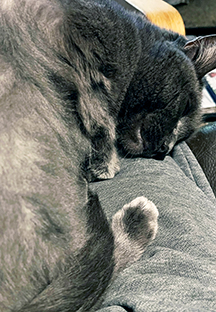
To make sure all of our pets make this letter, Cinderella is shown taking a cat nap on my lap.
Happy Hanukkah and Merry Christmas. Best wishes to you and your family. May even politics be positive in 2026!
Earlier in the year, I had not expected to travel back to the Boston area this year. With BC playing at Stanford, my usual classmate contingent came west to attend and the Notre Dame game at BC was limited to people with season tickets.
San Diego friends Lori and Joe Mahler, however, had season tickets and made one available to me, so I kept my string alive of visits to family and friends back East. And this time, in almost peak foliage season.
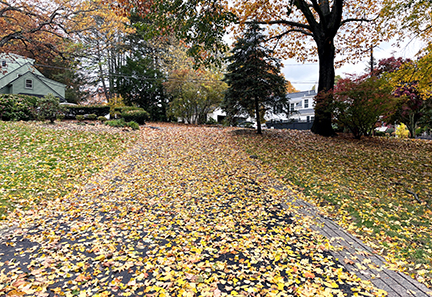
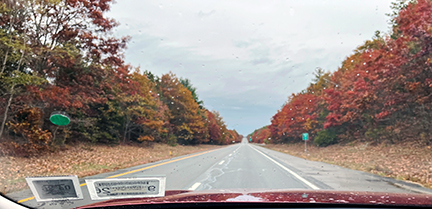
Taking my usual redeye in late October, I was able to recover at the home of Jackie Hewitt and Ed Hattauer in Winchester. That’s their driveway in the picture at the top of the post, conveying, I think, a classic scene of the season.
After visiting cousin Kathy Gagne McManamy on Plum Island, I returned to Winchester and later met Tom Burke for lunch October 31. As we walked into the Stockyard in Brighton, I recognized by sight and by sound my classmate, Bob Ryan. Bob is the Hall-of-Fame sportswriter and columnist for the Boston Globe.
He was lunching with Tony Massarotti, co-host of the #1 Boston sports radio program Felger & Mazz. As Tom chatted with Bob, Tony asked me what my relationship was with Bob. I told him, “Bob was on my staff at BC when I was co-sports editor of The Heights. Taught him everything he knows.” (Latter part of that not at all true.) Mazz looked stunned nonetheless.
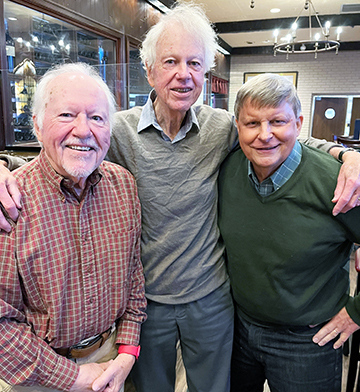
Bob Ryan, center, Tom Burke and me.
That afternoon, I met with former BC colleagues Susan Callaghan, Paul Hennessy, and Pat Casey. I had worked with Susan and Paul when I was editor of Boston College Magazine almost 50 years earlier. Lee Pellegrini, photographer with us, had died in August after working at BC for 40 years. We had reconnected sharing that news and recalled that afternoon how much we treasured our experiences together.
The game was the next day. The Eagles were already 1-7 and the Irish were favored by four touchdowns, so I was less expecting a competitive game and more interested in the spectacle.
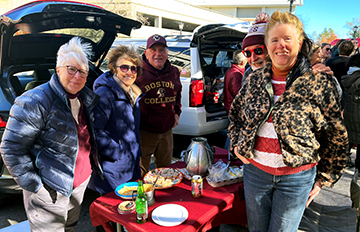
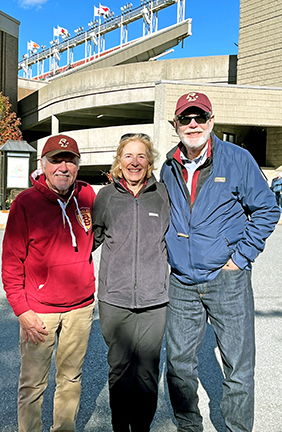
First, though, there’s tailgating. Ken Hamberg has a prime spot outside of Gate A at Alumni Stadium and that’s where we gathered.
L-R: Marcy Kenah, Debbie Hamberg, Ken Hamberg, Ed Hattauer, and Jackie Hewitt.
Joining us were Lori and Joe Mahler.
Our seats were on the east side of the stadium. While it meant we were among more visitors than on the west side, we had the sun for more of the game. That was a bonus on that brisk day.
Here are the Eagles entering the stadium.
You may hear some boo’s, because we were surrounded by Notre Dame fans. As mentioned earlier, Notre Dame was favored by 28 1/2 points. At halftime, Notre Dame had the lead, but only 12-7. The Irish fans were getting irritated. “What? Are you trying to give it away?” was one comment I heard. Among many like it.
In the third quarter, Irish fans got even more irritated and BC fans might have gotten a slight feeling of hope when the Eagles cut the lead to two, 12-10. I imagined fans in stadiums around the country looking at scores of other games and saying, “Wow! Look at the Notre Dame score.”
Early in the fourth quarter, BC drove to the Irish 23, but ND intercepted a pass at the six. Next play, Jeremiah Love, considered by many the best running back in college football, ran 94 yards for a touchdown. Irish won 25-10.
Much better than expected, but BC’s eighth loss.
Headed down to the Cape to see my sister and friends there. Met Ann in Woods Hole after she took the ferry from Martha’s Vineyard.
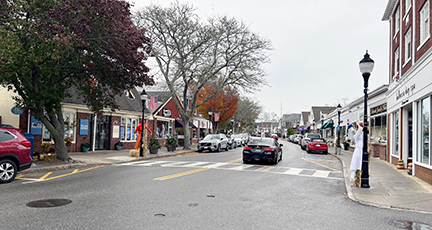
Classic Cape town of Falmouth.
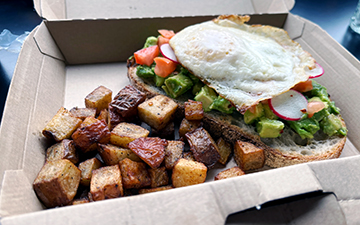
We went to Falmouth for lunch and found a place that specialized on breakfast toast. Saw one option was “Avocado Sunrise,” an avocado toast with a fried egg.
Avocado Sunrise
I was a little concerned about getting avocado on the Cape, but it ended up being ripe and delicious. I told the staff there that I lived in the “Avocado Capital of the World,” which is how Fallbrook describes itself, and that I thought theirs was pretty good.
Spent a long night, into the morning, talking with long-time friend Richard Sullivan, then visited with classmate and shipmate Steve Curran and his wife, Kathy. I had not known Steve at BC and met him when I joined the crew of USS Biddle (DLG-34). Then visited Susan and classmate Reid Oslin.
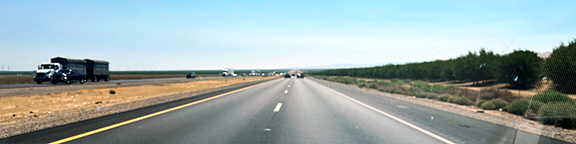
Driving on the mid-Cape highway, I found it a interesting comparison to my earlier trip on I-5 through the Central Valley of California.
Cape
Central Valley Back to Winchester and then to BC to see former colleagues. Visited with Maureen Raymond and Nate Kenyon. Very much missed visiting with Lee Pellegrini.
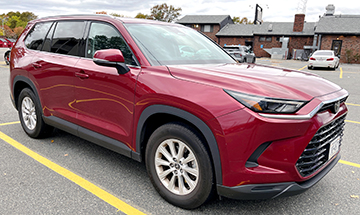
For three of my recent visits to Boston, I had a pickup truck as my rental vehicle. I had not reserved one, but it was either available or the only option available at the same rate as my less expensive choice. This time, the clerk said she noticed I was alone and asked if I would be okay with a “larger vehicle.” “Is it a pickup?,” I asked. No, but it was bigger than usual.
This is a Toyota Highlander . . . sorry, a Grand Highlander. Bigger than the regular SUV. Nice vehicle . . . and red, just like my ride at home.
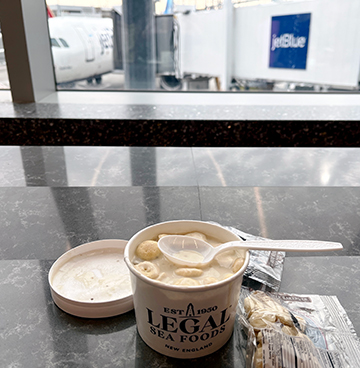
Heading home, I took my traditional photo of a serving of Legal Seafoods clam chowder at Logan.
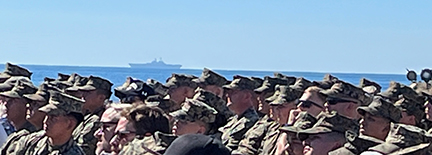
Ship silhouette off Camp Pendleton during Marines 250 event.
Back in mid-October, there was notice of a big celebration at Camp Pendleton to salute the 250th anniversary of the founding of the US Marine Corps. A live amphibious exercise, static displays, thousands of Marines, VIPs, etc. I had been invited years ago to observe an amphibious exercise there and it was impressive, but I thought the logistics for attending this one would be a problem.
Then I received an invitation to attend. With a pass and a procedure, which I thought would make things easier. Yeah, right.
The event was scheduled for 1200-1500 (noon-3 pm) October 18. The day before, I heard on the news almost weird information that the 5 freeway section that ran through Camp Pendleton might be closed during the amphibious exercise. It was related to a dustup between California governor Gavin Newsom and the Trump administration about the scheduling and manner of this event.
I was expected at the BC gamewatch that morning in downtown San Diego. I figured on attending that for about an hour and then head up north to Camp Pendleton. On my way south to San Diego on the 15 freeway, I saw road condition signs lit up with something like “Fed Gov Closure Fwy 5 11-3.” Wha??
On my way north at about 1000, I realized traffic was heavy because of people trying to get north on the 5 before it closed. This was the scene about 10 miles south of Oceanside and the southern edge of Camp Pendleton. The sign on right says “FED GOV. N 5 FWY CLOSURE AT SR 76 11-3 P” and, ominously, “LIVE WEAPONS OVER FREEWAY.”
I realized I was not going to get to Camp Pendleton on time by staying on the freeway. Getting off the freeway, I also realized a lot of other people were on its exits and entrances, creating traffic jams throughout. By getting past the jams and taking another entrance to the base, I was able finally to get on base and reach the commissary at about noon.
My shuttle to the event was leaving from the commissary and I thought I might have gotten on the last one, since the event was supposed to start at noon and the invitation asked that we get there early. In the first indication the event overall was less than militarily precise, it became clear the event would not start at noon.
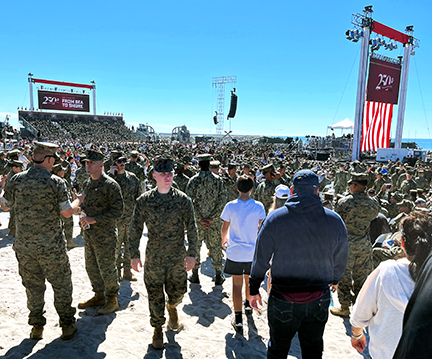
The invitation had said that attendees would “see” a sea-to-shore amphibious exercise. But we were not brought to the beach where I had seen such an exercise earlier. We were brought to Del Mar Beach, a recreational area, and we would see the exercise on a video screen set up in a “stadium” on the sand.
“Stadium” on the beach.
I had a good seat though. John Hernandez, a fellow Navy League officer and recently-elected junior vice commander of the California VFW, was a “special guest” for the event and had saved me a seat in the third row at the center of the event stage.
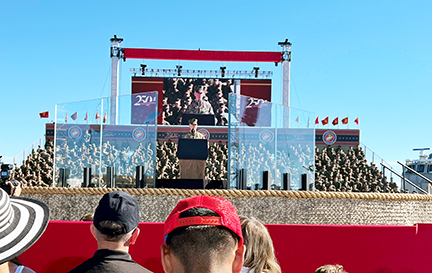
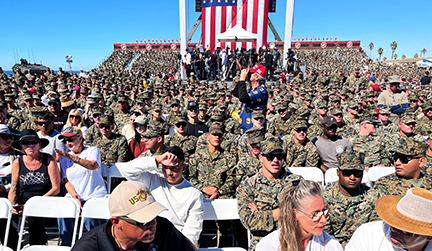
View from my seat during speech by Commandant of the Marine Corps.Some of the crowd in the stadium. I don’t think I’ve ever been around so many Marines at one time. And there were thousands outside the stadium as well.
When the amphibious exercise finally got underway, around 1300, the narrator provided more bombast than information. At one point, with several artillery pieces on screen, the narrator said, “. . . and the roar of artillery began. THUNDER from the skies!” One howitzer fired. And then . . . nothing for several minutes. Then change of scene and topic.
Only later did we learn that the first projectile fired, over the now closed 5 freeway and aimed at an inland impact area, detonated prematurely. At least one piece of shrapnel hit and damaged a California Highway Patrol car parked on the freeway, part of the detail providing security for Vice President JD Vance. No one was injured, but the “thunder from the sky” stayed quiet thereafter.
Both the Marines and the Trump administration gave sometimes conflicting information about the decision to fire live artillery shells over the roadway. One report said the only previous time it had occurred was more than 70 years earlier, before the freeway had become an interstate highway.
Back in the stadium, the crowd was entertained by flyovers of some of the aircraft involved in the exercise. Here is a compilation of those (42 secs). At the beginning, the first jets were lower and faster, and louder, than the rest so they go by in a flash. That’s followed by them in “slow motion,” which does little to slow them.
Following the flyovers, the speeches renewed. When the emcee said the event was going to go on for “the next few hours,” I deferred. I was leaving when Secretary of Defense Pete Hegseth began to speak. I heard him say that, while he didn’t think he should say so, “You Marines are my favorite.” I bet that’s not the first time he’s said that to one service or the other.
Apparently, all this was for a special video broadcast on November 9, the day before the actual Marine anniversary. It also took place on the same day as the nationwide “No Kings” rallies opposing the Trump administration. What a coincidence.
For a less bombastic view of an amphibious exercise, this is a video (7:03) from the aforementioned exercise I attended on the actual beach at Camp Pendleton in 2017.
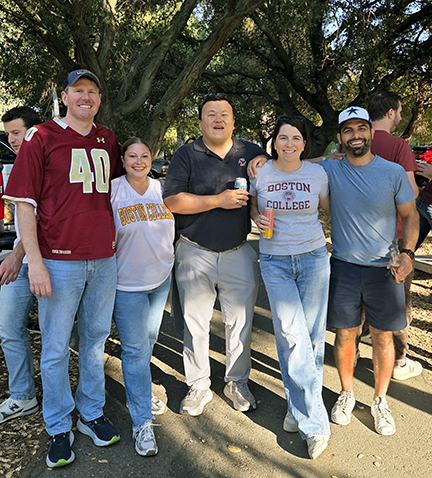
As my car was to carry the “stuff” for the tailgate Saturday afternoon, there was room for only one passenger and Tom Sugrue volunteered to help set up the table, chairs, etc.
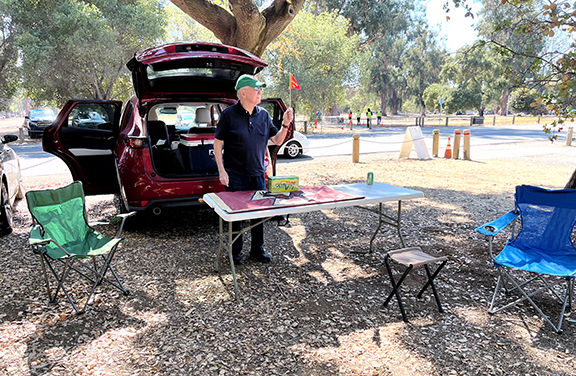
We arrived at the entrance to the preferred tailgate area at 2 pm, 30 minutes before it was to open. We were the first car in line. And soon after the gate opened, we were ready.
Tom at the tailgate, ready for more!
The rest of the Moss Beach group was to arrive via Uber a bit later in the afternoon. Meanwhile, we were soon joined by Lissa and Brian Tsu from the San Diego alumni chapter, Chris Lamb from the Bay Area, and an increasing number of BC alumni.
L-R: Bill Connors ’00, Alyssa Connors, Brian Tsu ’00, Lissa Tsu ’00, and Diego Garcia.
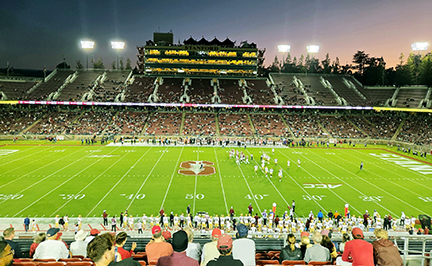
Too soon, it seemed, it was time to go to the game. As mentioned in the first post, our seats were pretty good. Here’s the view.
The performance by the Eagles didn’t match the quality of our seats. Tied at halftime, BC didn’t score again and allowed Stanford 10 second half points to give the Cardinal their first win of the year, 30-20.
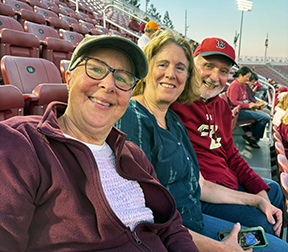
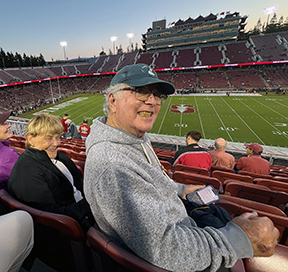
Here are some snapshots in the stands.
Marcy, Jackie, and EdShelia and DanLissa and me, and Tom Sugrue right behind us.
A great day. A disappointing evening.
The drive home
Heading south on the 5. Still straight.
The trip back to Fallbrook took two hours less than the drive north. Two basic reasons: it was a Sunday and, when I got to the LA area, I took the inland freeways instead of the coastal ones.
Friday night before the BC-Stanford game, the crew that stayed in Moss Beach went out to dinner at local favorite, the Moss Beach Distillery Restaurant.
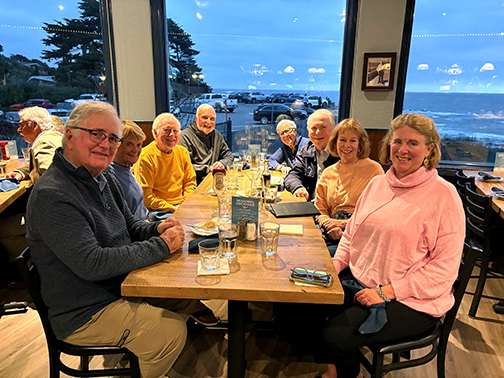
L-R: Dan Downey. Shelia Downey, Me, Ed Hattauer, Marcy Kenah, Tom Sugrue, Pat Sugrue, and Jackie Hewitt.
Meanwhile, in Menlo Park.
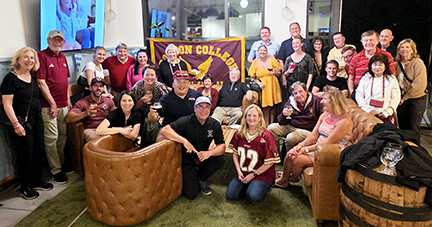
Members of the San Diego chapter, as well as some from LA, Orange County, and San Francisco, gathered Friday evening in Menlo Park for pre-gaming.
The 7:30 pm kickoff time for the game meant that tailgating could start after 2:30 pm on game day. So that left some time Saturday morning for a walk around the local area, particularly the seashore.
Most of the others had gone earlier, so I was on my own. The Fitzgerald Marine Reserve is a San Mateo County protected area. The coast there is primarily an inter-tidal area, where the difference between low and high tide creates a distinctive environment for algae, crabs, sponges, seastars, mollusks, and fish.
Throughout our time in Moss Beach, we would see flocks of birds, mostly brown pelicans, flying north and south along the coast line. Soon after entering the marine reserve and standing on a bluff, I was lucky enough to view such a flock flying north below me.
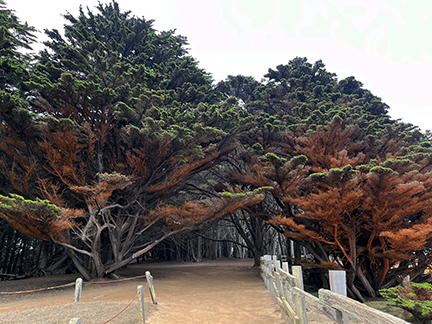
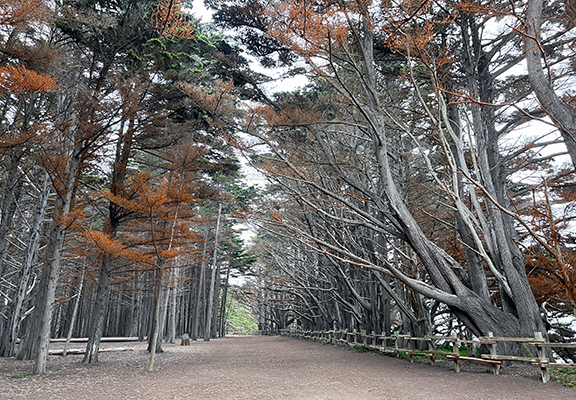
Plant life, most notably trees, was also distinctive in this environment. The local unofficial name for the area is the “enchanted forest.” Here are some views.
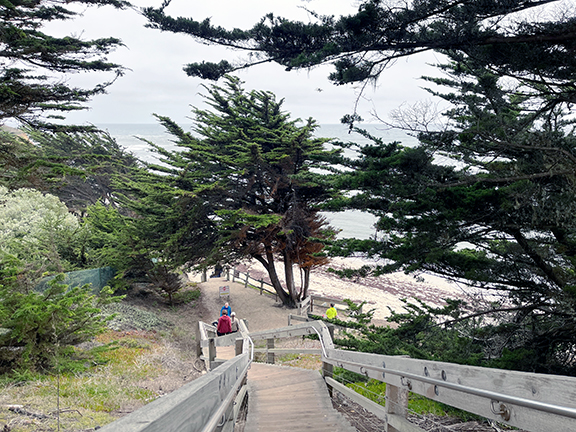
And the stairway to Seal Cove Beach. Didn’t take it.